Research Journal

Investigations by the atlas’s editors, newest first.


The First Farmers: How Agriculture Changed Human Diets

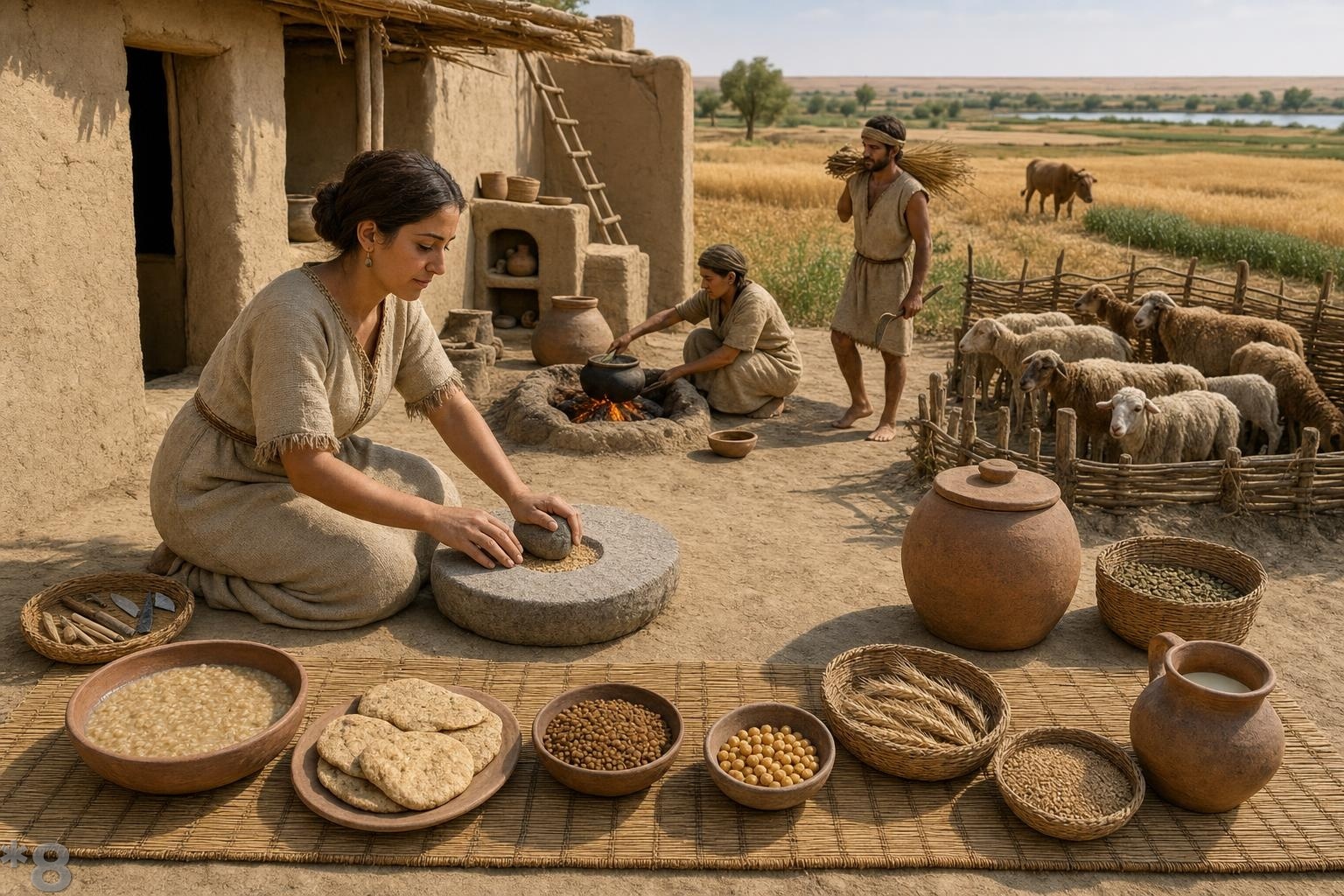
Farming was invented independently in several parts of the world, and in each the new crops took thousands of years to become what people mainly ate. When they did, diets narrowed to a few starchy staples, more children were born, and skeletons record more tooth decay, more disease and shorter adults.
When Did Humans Start Cooking?

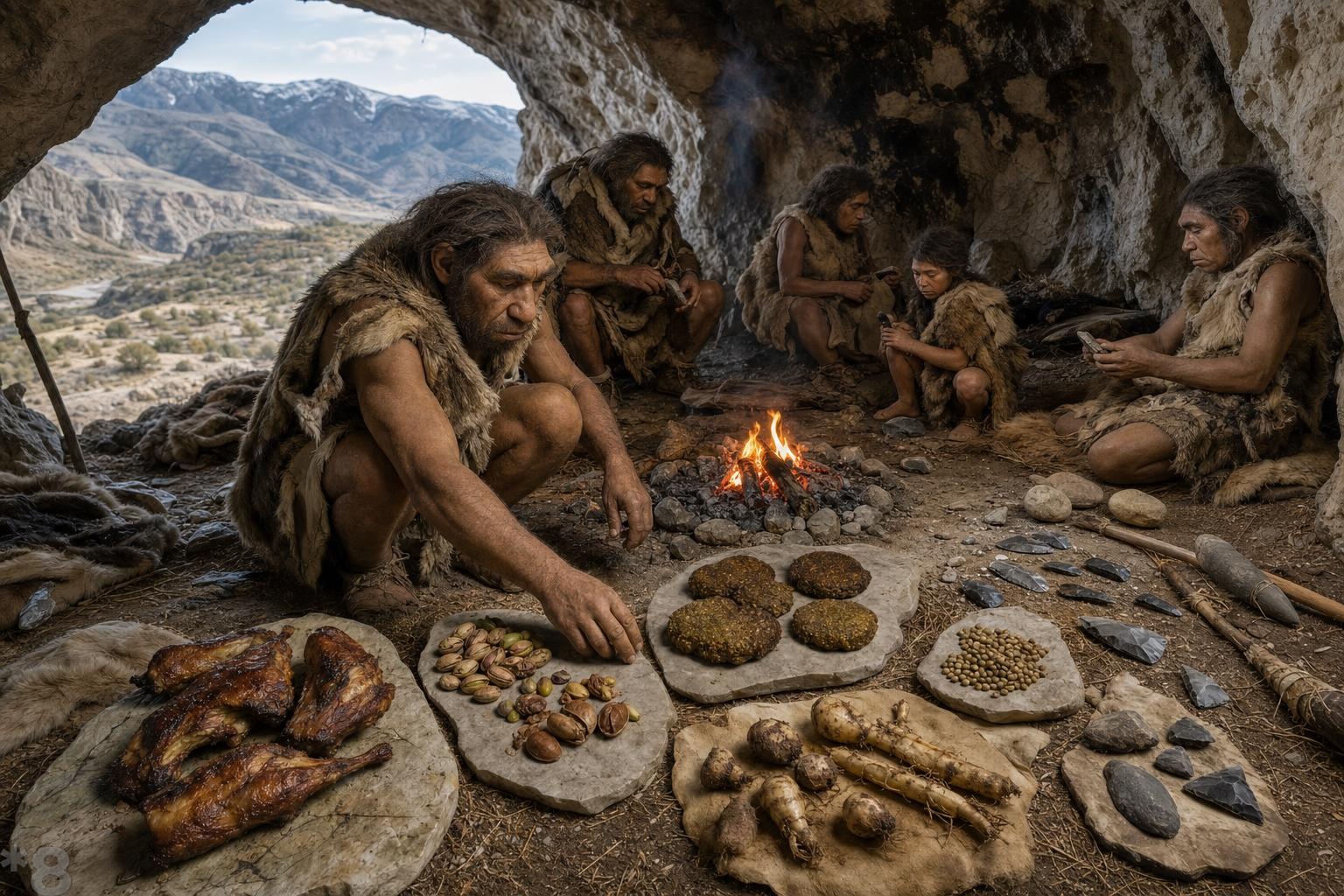
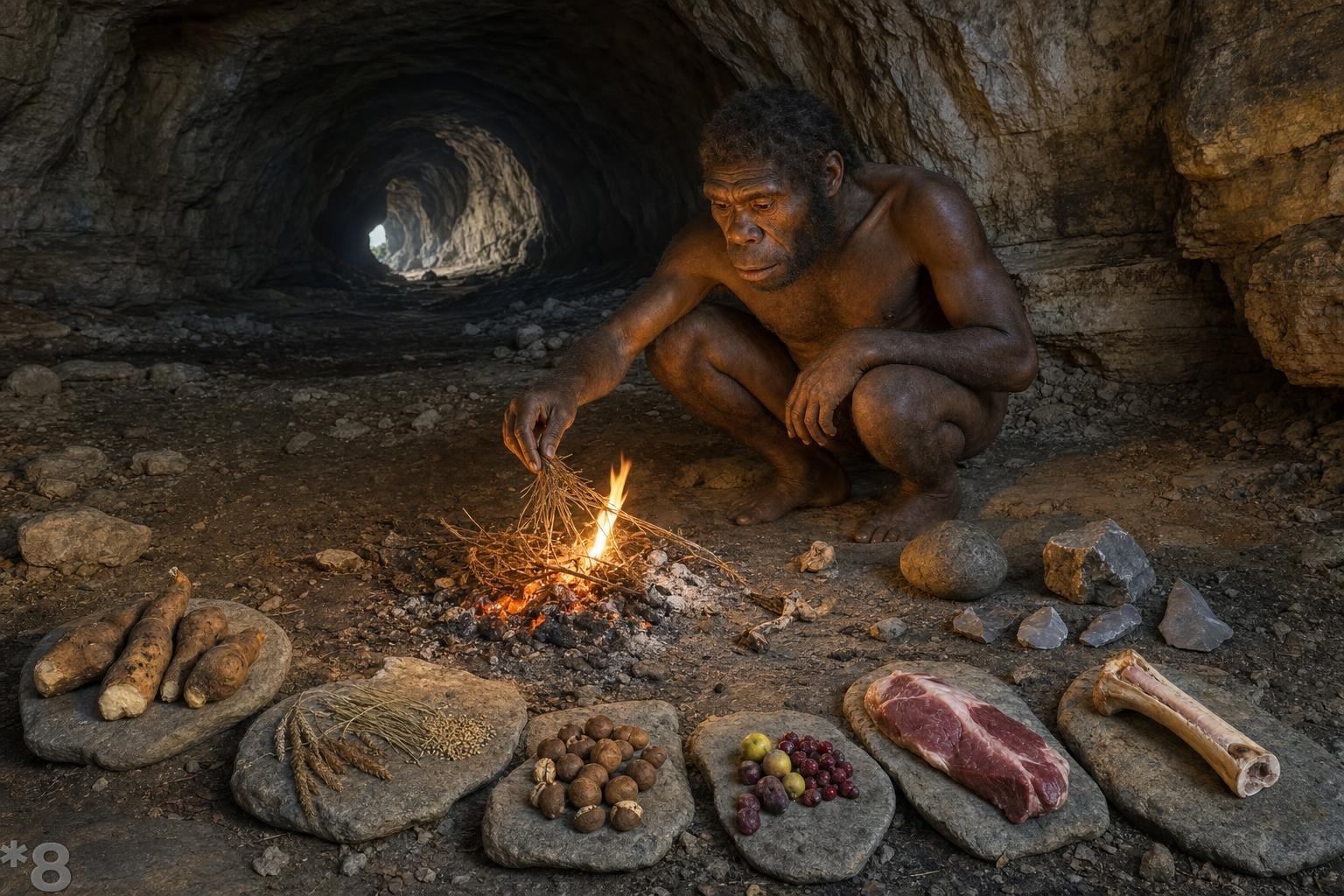
Burning near people is attested about a million years ago, and the oldest claim of a cooked food is fish heated about 780,000 years ago. Fire became an everyday part of life only after about 400,000 years ago, and the biological case for an earlier start is still waiting for its evidence.

The First Bread: Before Agriculture

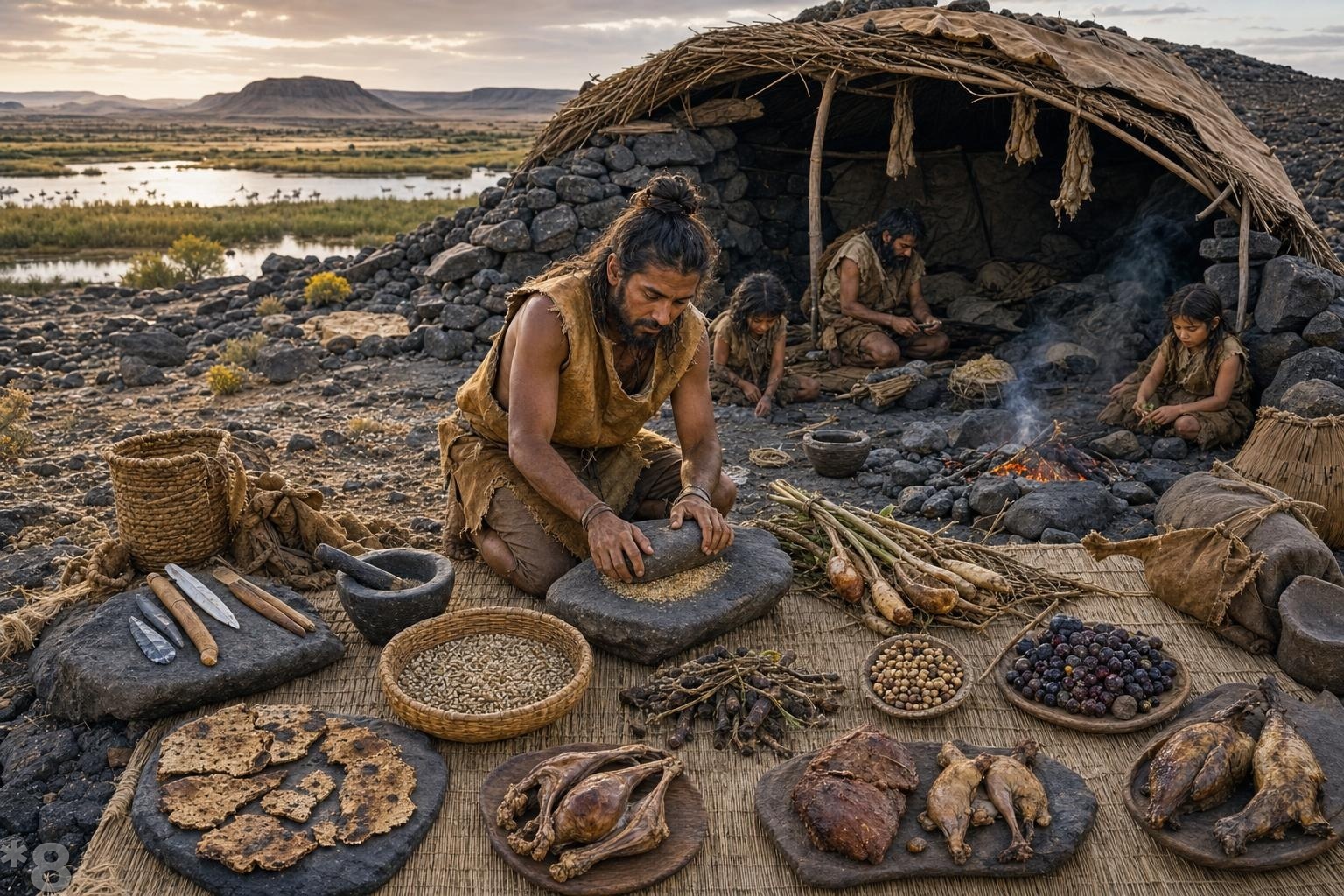
The oldest direct evidence for bread comes from a hunter-gatherer camp in Jordan about 14,400 years ago, at least four millennia before farming. Older grinding tools show that plants were processed, not that bread was made, and bread most likely became an everyday food only after agriculture.

Environments and Adaptation

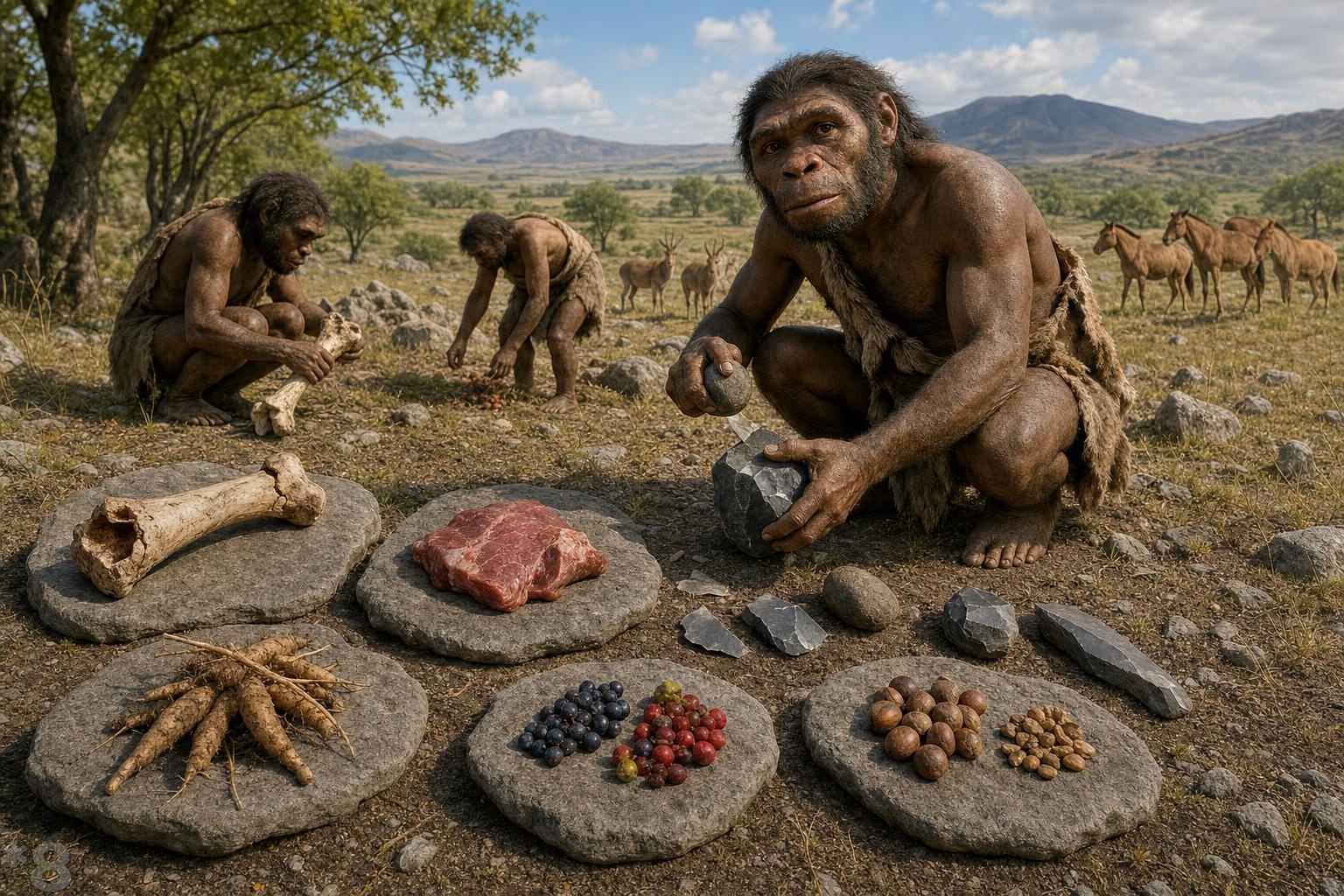
The oldest food evidence belongs to particular landscapes, not to one Paleolithic menu. A Caucasian forest-steppe, an East African rift basin, an island, a rainforest and the Arctic each posed a different problem, and each preserves a different, partial record of how people met it.

What Did Humans Eat 100,000 Years Ago?

Around 100,000 years ago, different hominin populations exploited combinations of terrestrial animals, marine resources, and plants. No reliable global meat-to-plant ratio can be calculated from surviving evidence.